

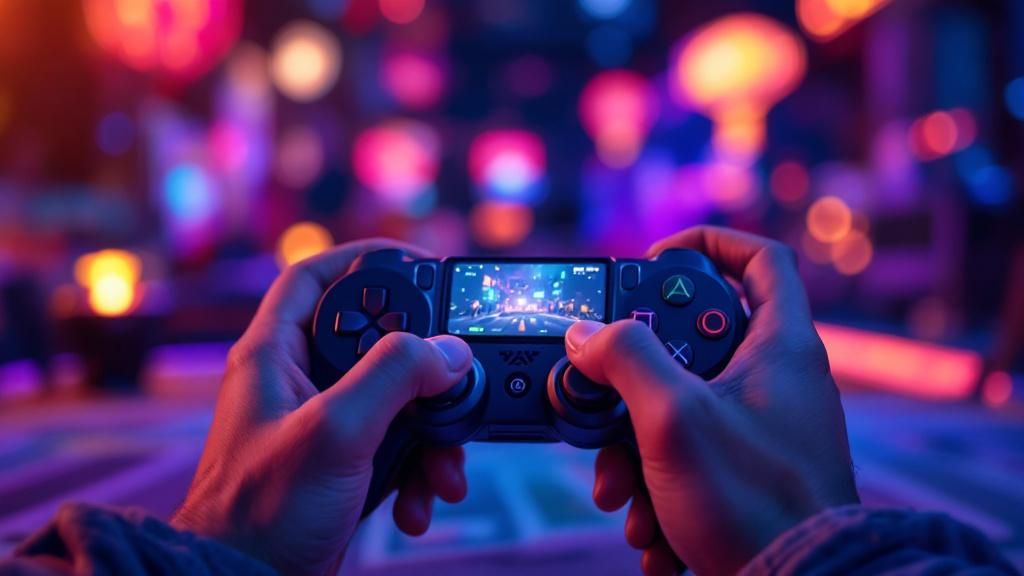
For numerous disabled gamers worldwide, accessibility features have transformed gaming from an impossible dream into an achievable reality. Mobile games, in particular, have become increasingly inclusive, offering flexible control schemes, sight and sound customisation, and text-based dialogue support that level the playing field. This article explores how these vital functionalities are enabling disabled players to experience mainstream titles together with their non-disabled peers, whilst assessing the sector’s increasing dedication to inclusive design and the significant effect accessibility has on gaming populations.
The Importance of Inclusive Design in Gaming
Accessibility in gaming represents far more than a basic comfort addition; it is a fundamental right that enables millions of disabled people to participate fully in digital gaming experiences. Without sufficient accessible design, countless would-be gamers are excluded from experiences that non-disabled players consider standard. By introducing carefully considered features such as adjustable input options, resizable text, and sound-based narration, developers create pathways for players with disabilities to engage with the identical games their counterparts experience, promoting authentic inclusion within the gaming sector.
The value of accessible gaming goes further than individual enjoyment, delivering broader social and economic benefits. When game developers prioritise accessibility, they expand their potential audience considerably, whilst simultaneously fostering an inclusive environment that benefits everyone. Mobile games have become particularly powerful vehicles for this shift, offering flexible platforms where accessibility features can be seamlessly integrated. This accessibility-focused strategy demonstrates that accessibility and mainstream gaming are not opposing ideas, but rather interconnected aspects that enhance the overall quality and reach of gaming experiences for all players.
Core Accessibility Features for Mobile Games
Modern mobile games incorporate a wide variety of accessibility features intended to cater to players with varying abilities and disabilities. These features encompass visual, audio, motor, and cognitive considerations, letting developers create inclusive gaming experiences that preserve quality or entertainment value. From customisable interfaces to adjustable controls, these tools enable disabled gamers to participate in mainstream titles on their own terms, promoting a more welcoming and diverse gaming environment for all players.
Visual Access Features
Colour vision deficiency affects millions of players worldwide, rendering colour-coded game mechanics challenging. Mobile games increasingly feature colourblind modes that modify palettes to ensure critical visual information remains distinguishable. Furthermore, enhanced contrast options, enlarged text options, and customisable UI scaling allow players with reduced vision to navigate menus and game interaction effectively. These visual adjustments guarantee that vision loss or colour vision deficiency doesn’t hinder engagement with game content.
Screen reader support constitutes a key visual accessibility element, enabling blind and severely visually impaired gamers to access mobile games through spoken descriptions and haptic feedback. Developers are progressively adopting voice conversion features, spoken audio guides, and inclusive menu designs that work seamlessly with assistive technology. These developments illustrate how thoughtful design can create truly inclusive gaming, permitting sight-impaired players to appreciate story-driven content, tactical gameplay, and competitive features.
Auditory and Hearing Accommodations
Deaf or hard-of-hearing players require comprehensive subtitle and captioning systems to completely enjoy mobile games. Current accessible titles offer not only conversation subtitles but also detailed captions showing sound effects, music cues, and directional audio information. Customisable caption sizes, colours, and positioning ensure readability without hindering gameplay, whilst visual audio cue systems substitute for audio-dependent gameplay mechanics completely.
Beyond subtitles, vibration technology and on-screen alerts have transformed audio accessibility in smartphone games. Haptic signals can convey important audio information, from nearby opponent locations to achievement notifications, enabling deaf players to receive crucial gameplay feedback. Alongside adjustable sound frequencies and mono audio options for players with single-sided deafness, these capabilities create truly accessible audio experiences that recognise varying levels of hearing.
How Software engineers Are Putting into practice Inclusive Design
Major game developers have acknowledged that accessible design advantages all players, not just those with disabilities. Studios are now embedding accessibility considerations from the earliest stages of production, rather than handling them as afterthoughts. This fundamental shift in methodology has resulted in more intuitive interfaces, flexible game mechanics, and adaptable control systems that cater to diverse player needs. By emphasising inclusive design during the development stage, developers design games that are naturally more engaging and user-friendly for all players.
Many studios work together with disabled gamers and accessibility consultants to guarantee their implementations are authentically impactful. These partnerships have produced innovations such as eye-gaze technology, voice-activated controls, and dynamic difficulty adjustment that modify automatically to individual player abilities. Leading game companies now employ specialist accessibility departments, whilst industry standards and guidelines—such as the Game Accessibility Guidelines—offer extensive implementation guides for deployment. This collaborative approach confirms that accessibility features address real-world needs rather than based on assumptions about disabled players’ requirements.
The financial and commercial performance of inclusive gaming titles has shown that accessible design is economically sustainable. Products with comprehensive accessibility features have drawn wider player bases and received strong recognition from critics and the gaming community. This achievement has incentivised further investment in accessibility features across the industry. As increasing numbers of developers witness the favourable response and expanded market reach that accessibility provides, the push for inclusive approaches keeps growing, promising an increasingly welcoming gaming landscape for disabled gamers worldwide.
